
Consistent Leadership: Why Consistency Builds Trust and Performance
Consistent Leadership: Why Leadership Consistency Builds Trust and Performance
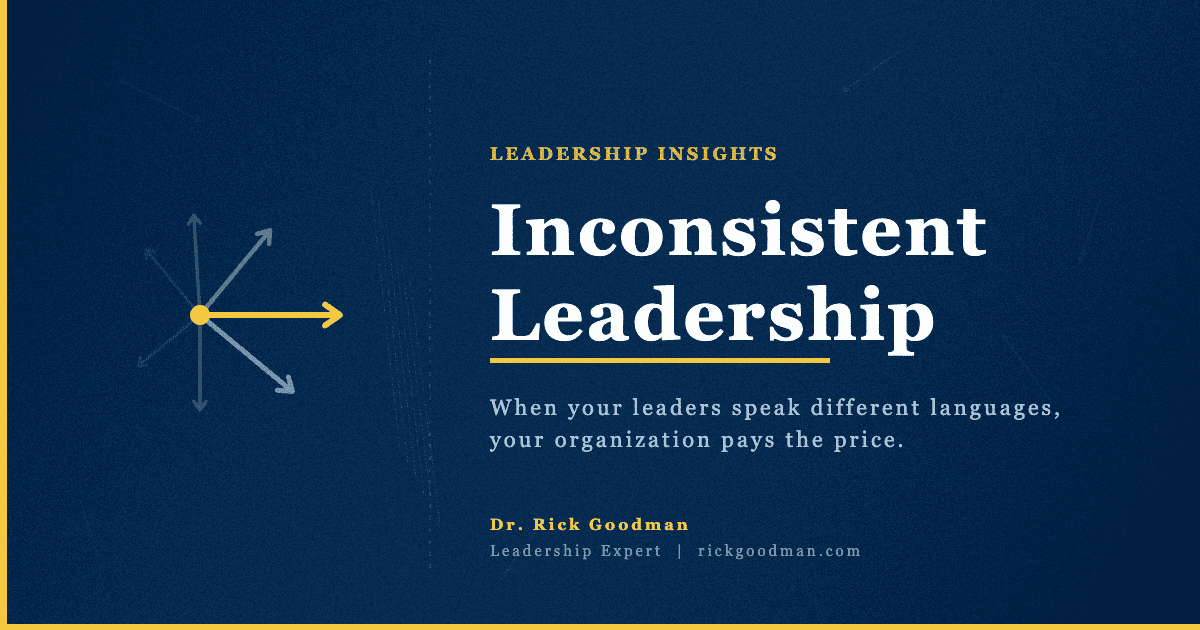
Consistent leadership gives people something every strong team needs: a clear sense of what they can rely on. Leadership consistency does not mean refusing to change. Instead, it means applying standards fairly, explaining decisions clearly, and making necessary changes in a way the team can understand. When inconsistent leadership takes over, trust weakens, confusion grows, and performance suffers.
A little change is not inherently bad. Markets shift, strategies evolve, and sometimes a course correction is necessary. However, there is a significant difference between strategic adaptation and chronic inconsistency. As a result, one builds organizational resilience while the other quietly destroys it.
Why Is Consistency Important in Leadership?
Consistency is important in leadership because employees need to know what standards, values, and expectations they can trust. When leaders communicate clearly and apply decisions consistently, teams spend less energy guessing what might change next. That creates more focus, stronger accountability, and greater confidence in day-to-day decision making. Consistent leadership gives employees the confidence to make decisions without constantly second guessing what their leader expects.
Consistent leadership also makes change easier to accept. Employees do not expect leaders to make the same decision forever. They do expect leaders to explain why a decision changed and to connect that change to stable values or new information. That is the difference between leadership consistency and rigidity.
What Leadership Consistency Looks Like in Practice
- Clear standards that do not change based on mood or pressure.
- Fair application of expectations across the team.
- Follow-through on commitments and decisions.
- Open explanation when new information requires a change in direction.
- Core values that remain stable even when tactics change.
Why Inconsistent Leadership Destroys Team Performance
How Inconsistent Leadership Erodes Trust
Trust is the foundation of any successful team. It enables open communication, genuine collaboration, and the willingness to take the calculated risks that drive growth. When a leader constantly changes their position, it sends a clear message: their decisions are not reliable.
When employees cannot trust their leader's judgment, they disengage. Consequently, motivation drops, and the best performers, the ones with the most options, start looking elsewhere. The cost of that erosion compounds quietly until the damage becomes visible in turnover numbers, performance gaps, and a culture that defaults to self-protection rather than contribution.
How Inconsistent Leadership Creates Costly Confusion
Imagine a team working on a project with clear goals and defined expectations. The leader then shifts direction entirely, often without explanation. As a result, the outcome is confusion, frustration, and wasted effort that could have been directed toward productive work.
Employees need clear direction to perform at their best. Inconsistent leaders leave their teams scrambling to understand new priorities, causing delays and hindering progress on the work that actually matters. Moreover, each direction change sends the implicit message that previous effort may not have been worth the investment.
Inconsistent Leadership Stifles Innovation
Leaders who constantly change their minds create an environment where people are afraid to take risks. If a leader cannot be counted on to stand behind a decision, why would an employee invest time and energy into something that might be abandoned without warning?
This dynamic stifles innovation and creativity, both of which are essential for organizations that want to stay competitive. When employees believe an idea may be abandoned without warning, they naturally become more cautious. Inconsistent leadership makes it harder to build the psychological safety and confidence required for experimentation.
Inconsistent Leadership Breeds a Culture of Cynicism
Leaders set the tone for workplace culture. When a leader exhibits inconsistency, it signals that nothing is sacred, not even core values or established practices. That breeds cynicism and a pervasive sense of why bother among employees who have learned that what is true today may not be true tomorrow.
When employees feel like the rules of the game are constantly changing, staying motivated and invested becomes genuinely difficult. Over time, that uncertainty can turn into disengagement, self-protection, and lower discretionary effort.
"Consistency is not rigidity. It is the foundation that allows your team to trust that when you commit to something, it means something. Without it, everything else you build in your culture is built on sand."
Inconsistent Leadership vs Strategic Adaptation
Effective leaders do change direction. The difference is in how and why. Specifically, strategic adaptation is deliberate, communicated, and grounded in new information or changed circumstances, while inconsistent leadership is reactive, unexplained, and driven by shifting moods, opinions, or pressures of the moment.
Your team can follow a leader who changes course when the evidence demands it. They struggle to follow a leader whose decisions feel arbitrary or unpredictable, which is often at the heart of the difference between a boss vs leader. The former builds confidence. The latter builds anxiety.
Not sure whether your leadership style is building trust or quietly undermining it?
How to Lead With Consistency Without Becoming Rigid
Involve Your Team Before Making Decisions
When team members contribute to a decision, they understand the reasoning behind it and feel greater ownership of the outcome. That shared ownership makes changes, when they are genuinely necessary, far easier to communicate and implement. It also reduces the likelihood of decisions that need to be reversed because important perspectives were not considered in the first place.
Communicate Clearly and Explain Your Reasoning
Transparent communication does not just share what was decided. It also shares why. When your team understands the reasoning behind your decisions, they can better evaluate new information against that reasoning rather than treating every update as arbitrary. That context transforms direction changes from disruptions into navigation.
Acknowledge Mistakes and Move Forward
No leader is perfect. If you need to make an adjustment, own it clearly, explain what changed, and focus the team's energy on moving forward rather than relitigating the past. For more on how leaders build the trust that makes this kind of honesty possible, see the article on how leaders build trust.
Anchor Everything in Core Values
While processes and strategies must adapt, core values can and should remain constant. They serve as the guiding framework that makes change legible to the people experiencing it. When your team understands that a direction change still reflects the same underlying values, the change feels like navigation rather than inconsistency. For the leadership framework that makes this systematic, explore the Solutions Oriented Leader workshop.
Traits of a Consistent Leader
A consistent leader is predictable in the right ways. Team members know how that leader will communicate, what standards matter, and how decisions will be evaluated. That predictability creates confidence without requiring the leader to become inflexible.
Clear Expectations
Consistent leaders define what good performance looks like and reinforce those expectations over time. Employees do not have to guess which standard applies today.
Fair Decision Making
Leadership consistency also means applying principles fairly. Similar situations should produce similar reasoning, even when the final decision changes because the facts are different.
Reliable Follow Through
When a leader makes a commitment, the team should expect follow through. If circumstances change, the leader explains the change instead of quietly abandoning the commitment.
Stable Values, Flexible Tactics
The most consistent leaders are not rigid. They adapt tactics while keeping their core values steady. That combination allows teams to navigate change without losing trust in leadership.
The Consistency Dividend: What You Gain by Fixing Inconsistent Leadership
Leadership consistency produces compounding returns because every other leadership investment depends on trust. Specifically, leaders who demonstrate consistent decision making, clear communication, and principled adaptation create an environment where teams can focus, take initiative, and stay engaged through difficult periods. Over time, consistent leadership strengthens trust, accountability, and the willingness of people to take ownership of results.
Why the Return Compounds Over Time
Consistency in leadership is not about being inflexible or unwilling to adapt. Instead, it is about being someone your team can count on. That reliability separates leaders who build great cultures from those who create uncertainty. For more on building the culture that attracts and retains high performers, see the article on organizational culture that attracts top talent.
"Inconsistent leadership does not just create confusion. It creates a culture where the best people quietly stop bringing their best because they have learned it may not matter tomorrow."

About Dr. Rick Goodman, CSP
Dr. Rick Goodman is a Certified Speaking Professional, six-time Global Gurus Top 30 Leadership Expert, and author of five books including the Amazon number one bestseller The Solutions Oriented Leader. He has delivered more than 2,000 programs across all 50 states and 32 countries, helping executives build the decision-making habits and communication disciplines that create high-trust organizations.
Continue Reading
- Boss vs Leader: What's the Real Difference?
- How New Leaders Build Trust
- Solutions Oriented Leader Workshop
- Organizational Culture That Attracts Top Talent
- Traits of a Solutions-Oriented Leader
- Executive Coaching Services
Ready to Build the Consistent Leadership Culture Your Team Deserves?
Dr. Rick Goodman works with executives and leadership teams across the country to build the decision-making habits, communication disciplines, and cultural practices that create high-performing, high-trust organizations. Keynotes, workshops, and executive coaching programs that produce measurable results.
Book Dr. Rick GoodmanInconsistent Leadership: Questions Leaders Ask Most
Common Questions About Building Consistent Leadership
If your question is not answered below, call us at 1-954-218-5325 or email rick@rickgoodman.com.
Inconsistent leadership happens when a leader's decisions, direction, or standards shift unpredictably, without explanation or a clear reason tied to new information. It is different from strategic adaptation, which is deliberate and communicated, because inconsistent leadership feels arbitrary to the team experiencing it.
When a leader constantly changes position without explanation, employees learn that decisions are not reliable. This erodes trust, drops motivation, and drives the best performers, the ones with the most options, to start looking elsewhere.
Strategic adaptation is deliberate, communicated, and grounded in new information or changed circumstances. Inconsistent leadership is reactive, unexplained, and driven by shifting moods or pressures of the moment. Teams can follow a leader who changes course for clear reasons, but struggle to follow one whose decisions feel arbitrary.
Yes. The key is communication and reasoning. When a leader explains why a change is happening and anchors it in stable core values, the team experiences it as navigation rather than inconsistency. What damages trust is not change itself, but unexplained, unpredictable change.
When employees cannot count on a leader to stand behind a decision, they become reluctant to invest time and energy into new ideas that might be abandoned without warning. This risk aversion stifles the innovation and creativity organizations need to stay competitive.
Involve the team before making decisions, communicate the reasoning behind choices clearly, acknowledge mistakes openly rather than avoiding them, and anchor every decision in stable core values so that necessary changes still feel connected to a consistent foundation.
Building Leadership Consistency
Consistency is important in leadership because teams need to understand what standards, values, and decisions they can rely on. Leadership consistency creates trust, reduces confusion, and gives employees the confidence to act without constantly wondering whether expectations will change.
A consistent leader communicates expectations clearly, applies standards fairly, explains changes in direction, follows through on commitments, and anchors decisions in stable values. Consistency does not mean refusing to adapt; it means making change understandable and principled.
Dr. Rick Goodman works with executives and leadership teams to build the decision-making habits, communication disciplines, and cultural practices that create high-performing, high-trust organizations, through keynotes, workshops, and executive coaching programs. To start the conversation, visit the booking calendar or call 1-954-218-5325.