
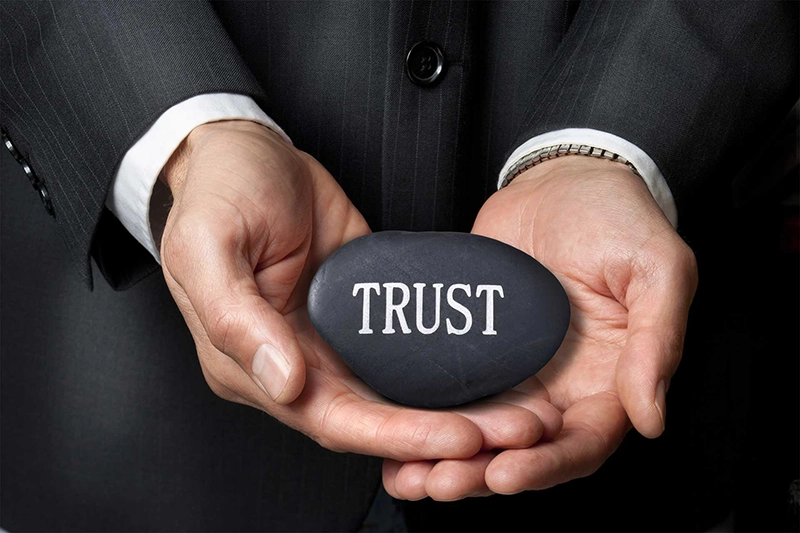
How Leaders Build Trust: 7 Behaviors That Earn Team Confidence
How leaders build trust comes down to behavior, not personality. Teams watch whether a leader keeps commitments, tells the truth, applies standards consistently, and takes responsibility under pressure. Those repeated signals determine whether trust in leadership grows or erodes.
This article focuses specifically on the leader behaviors that build trust with a team. For the broader organizational culture side of trust, see Building Workplace Trust: The Trust Dividend That Improves Performance.
Why Trust in Leadership Matters
Trust in leadership changes how employees respond to uncertainty. When people believe their leader is reliable and fair, they are more likely to share information early, accept difficult feedback, raise concerns, and take initiative.
Without trust, employees become more cautious. They protect themselves, withhold information, and wait for direction. That slows execution and makes leadership harder than it needs to be.
How Leaders Build Trust: 7 Core Behaviors
1. Do What You Say You Will Do
Reliability is one of the clearest ways to build trust as a leader. Every commitment becomes evidence. When you follow through consistently, your team learns that your word means something.
Small commitments matter as much as large ones. If you said you would send something by Friday, send it by Friday. If circumstances change, explain the change instead of disappearing from the commitment.
2. Tell the Truth, Especially When It Is Uncomfortable
Experienced employees recognize spin quickly. Leaders earn trust by communicating honestly about what is working, what is not working, and what is still uncertain.
Transparency does not mean sharing confidential information. It means avoiding unnecessary ambiguity and refusing to manage perception at the expense of credibility.
3. Protect Your Team Without Protecting Poor Performance
Leaders build trust when they stand behind their people while still holding clear standards. Give credit freely. Do not shift blame downward to protect yourself. At the same time, address performance issues directly and privately.
Trust grows when employees know their leader will be fair in both success and failure.
4. Stay Consistent Under Pressure
Pressure reveals leadership patterns. Your team notices whether stress makes you erratic, punitive, or defensive. Consistency does not mean having no emotion. It means employees can still predict the principles that will guide your response.
This is closely connected to consistent leadership. When standards and reactions change unpredictably, trust drops quickly.
"People do not decide whether to trust a leader based on one speech. They decide based on what that leader repeatedly does when the pressure is real."
5. Show Genuine Interest in People
Trust is relational. Leaders who understand what matters to their employees create stronger connections than leaders who treat people only as roles on an organization chart.
Ask questions. Remember what people tell you. Follow up. Small signals of attention often carry more weight than formal recognition programs.
6. Give Honest and Timely Feedback
Avoiding feedback does not protect trust. It creates uncertainty. Employees deserve to know where they stand, what needs to improve, and what support is available.
Useful feedback is specific, timely, private when appropriate, and focused on behavior rather than personal judgment.
7. Admit When You Are Wrong
One of the fastest ways to strengthen trust in leadership is to take responsibility without drama. Say what you got wrong, what you learned, and what will change.
Leaders who cannot admit mistakes communicate that self protection matters more than accuracy. Leaders who own mistakes show that getting to the right answer matters more than appearing infallible.
How New Leaders Build Trust in the First 90 Days
New leaders have a narrow window in which employees are deciding what kind of leader has arrived. You do not need to prove everything immediately. You do need to establish a pattern.
- Listen before making major changes. Learn what the team sees that you do not yet see.
- Keep early commitments. Reliability is remembered.
- Explain your decision process. People trust what they can understand.
- Learn where trust is already weak. Do not assume the previous environment was neutral.
- Address obvious inconsistencies quickly. Early fairness creates credibility.
How Leaders Rebuild Trust After a Mistake
Trust can recover, but only when the repair is specific. Start by naming what happened clearly. Take responsibility for the part you own. Explain what should have happened instead.
Then show the correction through behavior. An apology can open the door, but consistent follow through is what rebuilds trust.
Behaviors That Destroy Trust in Leadership
- Breaking commitments without explanation
- Applying different standards to different people
- Becoming defensive when challenged
- Taking credit and shifting blame
- Avoiding difficult feedback
- Changing priorities without explaining why
- Saying one thing while rewarding another
Trust in Leadership vs Workplace Trust
Trust in leadership is about the relationship between employees and the people leading them. Workplace trust is broader. It includes organizational systems, communication norms, fairness, decision processes, and how teams work together.
That distinction is why these two articles serve different search intent. This page answers how leaders build trust. The companion article explains how organizations build workplace trust and capture the trust dividend.

About Dr. Rick Goodman: Dr. Rick Goodman, CSP, is a Certified Speaking Professional and Global Gurus Top 30 Leadership Expert who has delivered more than 2,000 programs across all 50 states and 32 countries. He is the author of five books, including the Amazon number one bestseller The Solutions Oriented Leader.
More About RickContinue Reading
- Building Workplace Trust: The Trust Dividend That Improves Performance
- Consistent Leadership: Why Leadership Consistency Builds Trust
- Organizational Resilience: How Psychological Safety Helps Teams Adapt
- Belonging at Work: How Leaders Build a Stronger Workplace Culture
- Executive Coaching Services
- Solutions Oriented Leader Workshop
Ready to Build a Team That Trusts Your Leadership?
Dr. Rick Goodman works with new and experienced leaders to strengthen communication, accountability, consistency, and the behaviors that build lasting trust.
Book Dr. Rick Goodman