
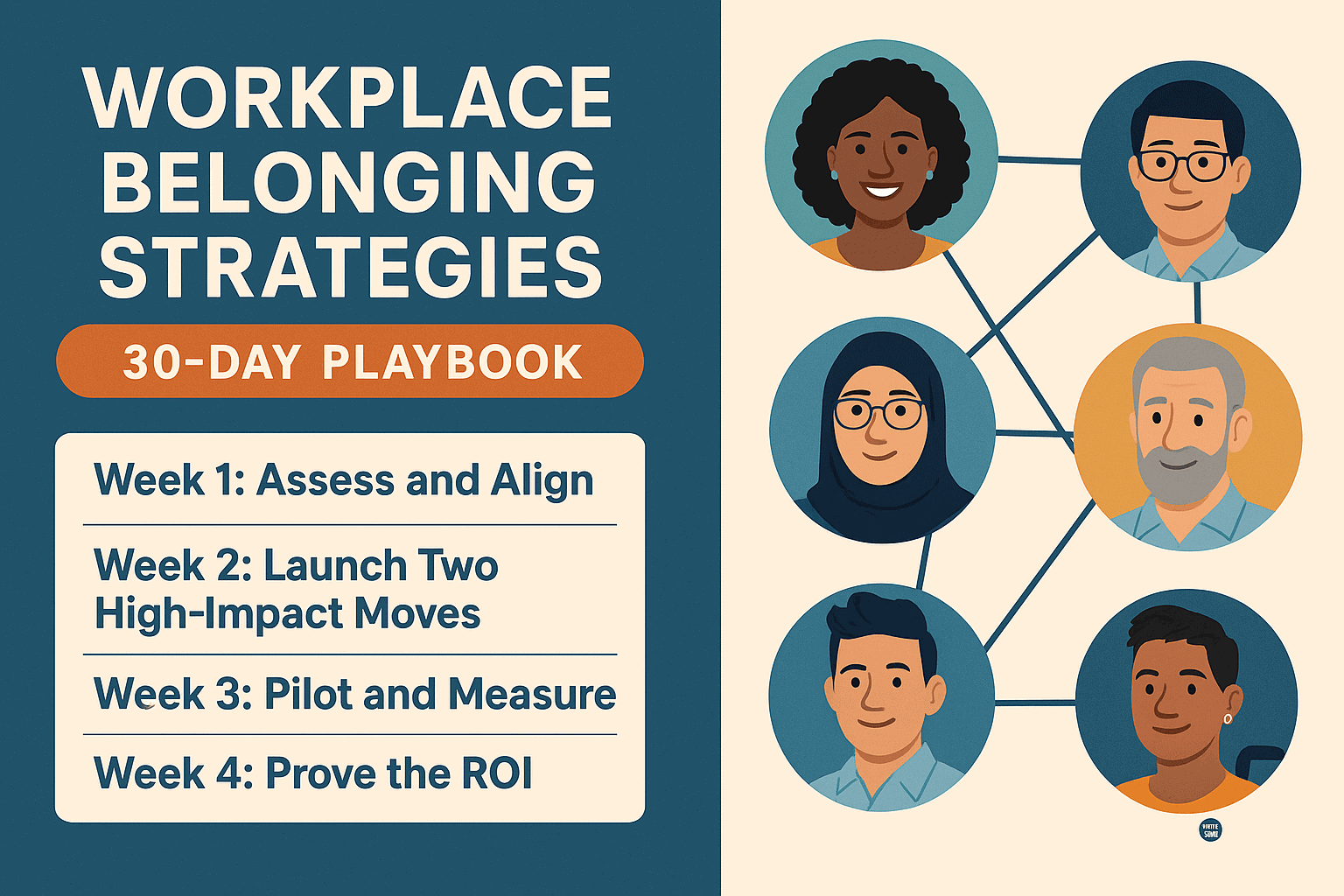
Belonging at Work: How Leaders Build a Stronger Workplace Culture
Belonging at work means employees feel respected, connected, heard, and able to contribute. That sense of belonging can influence engagement, retention, collaboration, and performance. When employees do not feel they belong, leaders often see more friction, less trust, and weaker commitment.
I am Dr. Rick Goodman, leadership keynote speaker and author of The Solutions Oriented Leader. For more than 30 years, I have helped organizations build cultures where people feel valued, accountable, and connected to the mission.
What Does Belonging at Work Mean?
Belonging at work is the experience of feeling accepted, respected, connected, and able to make a meaningful contribution. Deloitte describes workplace belonging through three reinforcing elements: comfort, connection, and contribution. In practical terms, employees need to feel safe being themselves, connected to people and purpose, and confident that their work matters.
That is why workplace belonging is more than a culture slogan. It shows up in everyday experiences such as whether employees believe their opinions count, whether they feel recognized, whether they trust their manager, and whether they see a clear connection between their work and the organization's mission.
Why Belonging Affects Performance
Belonging is the difference between employees who comply and employees who commit. When people feel respected, heard, and included, they bring more energy, creativity, and ownership to their work. When they do not, stress rises, trust erodes, and engagement collapses.
Gallup's engagement research connects belonging-related experiences with stronger workplace outcomes. Its framework includes whether employees feel heard, cared for, connected to purpose, and supported by meaningful relationships. Those experiences shape whether people show up with energy and commitment or simply do the minimum.
The Business Case for Workplace Belonging
The business case is strongest when leaders connect belonging to retention, engagement, and contribution. McKinsey reported that employees in organizations with higher inclusion scores were 45 percent more likely to stay and 90 percent more likely to go out of their way to help a colleague. In a separate Great Attrition survey, 51 percent of employees who had recently left a job said they lacked a sense of belonging.
Gallup also links belonging-related experiences to performance. For example, when employees believe their opinions count and have strong relationships at work, organizations can see improvements in retention, productivity, quality, safety, and customer outcomes.
The leadership question, therefore, is not whether belonging matters. It is how to create a sense of belonging at work in ways employees can actually feel and leaders can measure.
Belonging in the Workplace Goes Beyond Diversity Alone
Diversity is the invitation. Inclusion is the dance floor. Belonging is feeling safe enough to actually dance. Most organizations have made measurable progress on diversity and equity metrics. Far fewer have created the conditions where every person, regardless of background, cognitive style, or life experience, feels genuinely valued and empowered to contribute fully.
That gap is exactly where performance is being lost, and where the best leaders are now focusing their energy.
What This Looks Like in Practice
Belonging becomes visible through daily experiences rather than slogans. Employees are more likely to feel they belong when they can speak up without fear, receive recognition for meaningful contributions, build trusted relationships, and understand how their work connects to a larger purpose.
Other examples of workplace belonging include managers who listen before deciding, teams that make room for different communication styles, leaders who apply standards fairly, and organizations that respond seriously when employees raise concerns.
Neurodiversity Is a Culture Multiplier
Not everyone thinks, processes, or communicates the same way. Leaders who recognize and actively leverage different cognitive styles, from deep analytical thinkers to fast moving creatives to methodical systems builders, get better problem solving and broader innovation. Neurodiversity is not a challenge to manage. It is a competitive asset to develop, and it is one of the most overlooked dimensions of belonging at work.
The Measurable ROI of Belonging at Work
When leaders invest in belonging, the returns are concrete and trackable:
- Higher employee engagement scores across departments
- Lower turnover and significantly reduced replacement costs
- Stronger collaboration, faster problem-solving, and deeper trust
- Improved individual and team productivity over time
- Reduced absenteeism and burnout-related attrition
Belonging at work is not about comfort. It is about creating the conditions where people can perform at their best consistently, not just during peak seasons or under ideal conditions.
Belonging is the difference between employees who comply and employees who commit. Build the culture and the performance follows.
How Leaders Create Connection and Trust
Creating a sense of belonging at work starts with leadership behavior. Employees pay close attention to whether expectations are clear, whether standards are applied fairly, whether leaders listen, and whether people feel safe raising a different point of view.
The goal is not to make everyone think the same way. Instead, the goal is to create enough trust and connection that people can contribute honestly, disagree productively, and still feel part of the team.
Four Conditions That Strengthen Workplace Belonging
- Voice: Employees believe their opinions and concerns count.
- Recognition: People know their contribution is noticed and valued.
- Connection: Employees have trusted relationships with coworkers and leaders.
- Purpose: People understand how their work contributes to something meaningful.
Daily Leadership Behaviors That Strengthen Culture
Belonging does not happen by accident. Leaders shape it through daily behavior:
- Setting clear expectations so people know what success looks like
- Practicing consistent accountability that applies equally to everyone
- Communicating with respect, especially under pressure
- Creating psychological safety so people can raise issues without fear
During disruption, belonging erodes quickly unless leaders actively work to create stability and clarity. The leaders who protect belonging under pressure are the ones whose teams continue to execute when others stall.
Four Actions Leaders Can Take This Week
- Listen to your team without defensiveness. Ask and then actually hear the answer before formulating a response.
- Address issues directly instead of avoiding the difficult conversations that everyone can see need to happen.
- Recognize effort and contribution consistently, not just results. Effort recognition is what builds the psychological safety belonging requires.
- Hold people accountable with respect. High standards and human dignity are not in conflict. They are the combination that produces sustained performance.
Belonging at work grows when leaders model the behavior they expect. It shrinks when they do not. The team watches the leader's behavior far more closely than it listens to the leader's words.

Dr. Rick Goodman, CSP is a six-time Global Gurus Top 30 Leadership Expert, keynote speaker, and executive coach. He is the author of five books, including the Amazon number one bestseller The Solutions Oriented Leader, and has delivered more than 2,000 programs across all 50 states and 32 countries.
View the Hidden ROI of Belonging KeynoteHow to Measure the Impact
One of the strongest keyword opportunities around this topic is also one of the most useful leadership questions: how do you measure belonging in the workplace? Start with short pulse survey questions that assess voice, recognition, trust, psychological safety, connection, and purpose.
Then compare those responses with retention, engagement, absenteeism, and manager-level trends. Gallup's engagement framework offers useful examples of the kinds of experiences to measure, including whether employees believe their opinions count, whether someone at work cares about them, and whether they feel connected to the organization's mission.
Workplace Belonging Questions Leaders Can Track
- I believe my opinions count at work.
- I feel respected by my manager and team.
- I receive recognition when I make a meaningful contribution.
- I have trusted relationships with people at work.
- I understand how my work connects to the organization's mission.
- I feel safe raising concerns or offering a different point of view.
Do not treat one survey score as the whole story. Look for patterns by team and manager, then compare those patterns with actual retention and performance data. That approach turns workplace belonging into a leadership metric rather than a vague culture concept.
Continue Reading:
- Employee Engagement Strategies: The Leadership Framework That Actually Works
- The Trust Dividend: Why Building a Culture of Trust Supercharges Your Business
- 7 Different Leadership Styles for Your Workplace Culture
- The Workplace Wellness Program Framework That Actually Works
- Organizational Culture: Definition, Types and Examples
- Consistent Leadership: Why Leadership Consistency Builds Trust
- Executive Coaching Services
Build a Workplace Where Belonging Drives Results
Dr. Rick Goodman is a Certified Speaking Professional ranked among the Top 30 Global Leadership Gurus. His keynote programs, executive workshops, and leadership retreats are designed to strengthen leadership, build belonging, reduce friction, and deliver a measurable return on your investment in people.
Check Availability