
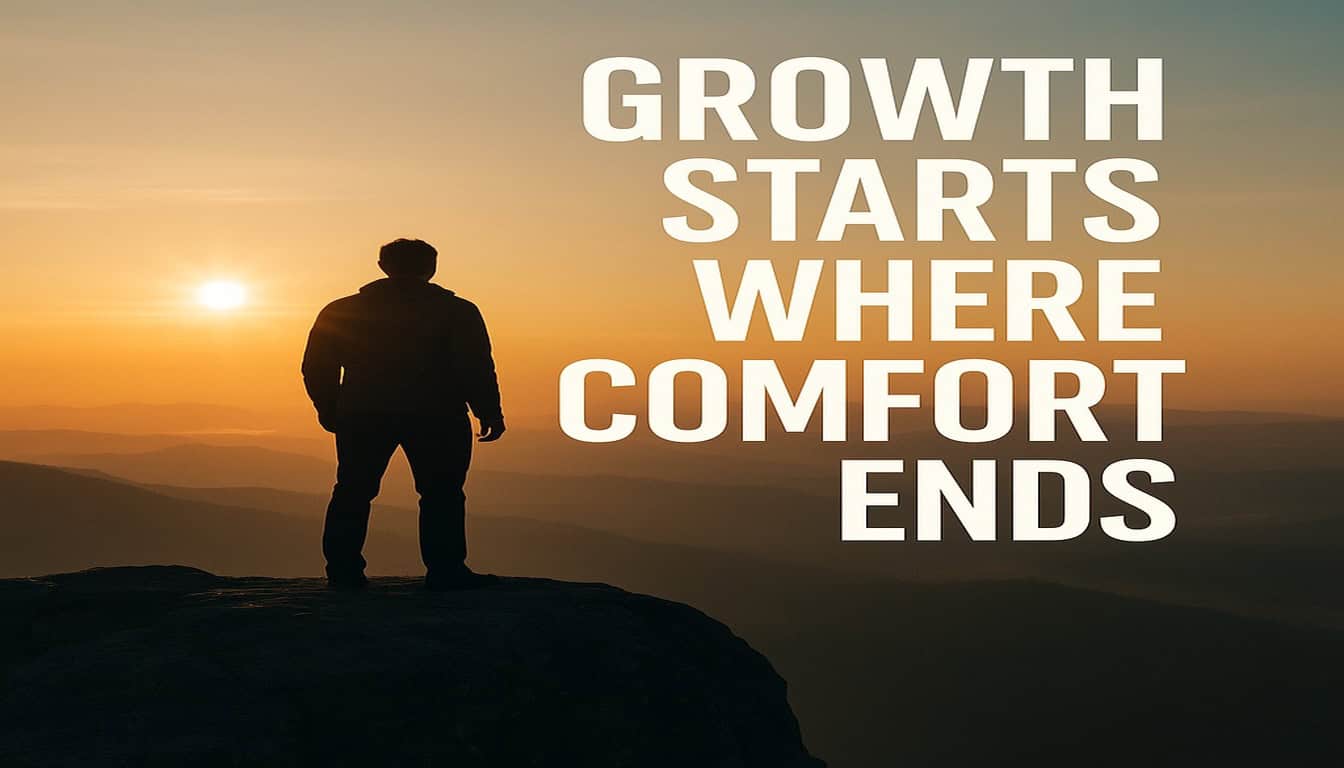
There are many leadership growth strategies a leader could follow. However, there is one that has served me best. Growth starts where comfort ends. Growth and comfort rarely coexist, and this is how high-performing leaders use strategic discomfort, short-term goals, and real commitment to accelerate leadership development.
If you are working hard but not moving forward, you might be stuck in your comfort zone. In leadership, business, and life, progress happens when we step into uncertainty and make commitments that last beyond the initial motivation. This article offers research-backed strategies you can apply today.
Lessons From a Mentor: The Wake-Up Call
One of my great mentors, Dr. Danny Drubin, had a simple way to cut through excuses. If he sensed I was stalling, he would call and say only, "It's time to get uncomfortable."
No pep talk. No hand-holding. Just a reminder that progress lives outside what feels safe. Every time I leaned into discomfort, growth followed, and that pattern is exactly why leadership growth strategies built around discomfort work so consistently.
Watch: The Power of Getting Uncomfortable
Dr. Rick Goodman shares the mentor moment that reshaped how he thinks about leadership growth and discomfort.
Why Discomfort Is a Leadership Superpower
Discomfort is not a problem. Instead, it is a signal that learning and adaptation are happening. Neuroscience shows that pushing beyond the familiar heightens focus and creates the conditions for neuroplasticity, the brain's ability to change and improve performance. See the research and practical tools from Dr. Andrew Huberman's work on focus and learning at Huberman Lab.
- Own a project with uncertain outcomes.
- Have the hard conversation you have delayed.
- Make the bold decision without a guaranteed safety net.
"If you are not a little nervous, you are probably not growing."
The Pain Principle: Why Growth Hurts Before It Helps
Like a return to the gym, leadership growth is uncomfortable at first. The soreness you feel during change is your leadership muscle rebuilding stronger. In fact, the Center for Creative Leadership's 70-20-10 model shows that about 70 percent of leadership development comes from challenging assignments, not classrooms, according to CCL.
Bring Dr. Rick Goodman to your next leadership event to build the resilience, accountability, and momentum your team needs to grow.
Commitment: The Finisher's Advantage
Starting is common. Finishing is rare. Build staying power with three practices.
Practice 01Anchor Your Why
Tie the work to a purpose bigger than the discomfort itself.
Practice 02Plan for Resistance
Expect motivation dips, and pre-decide your response before they arrive.
Practice 03Track Progress
Score micro-wins so momentum becomes visible rather than something you have to take on faith.
As John C. Maxwell puts it, "You'll never change your life until you change something you do daily," according to this source.
Small Wins, Big Impact: The Science of Short-Term Goals
Motivation fades. Systems sustain. Research from Teresa Amabile and Steven Kramer shows that visible progress on meaningful work is one of the strongest drivers of engagement and creativity, according to Harvard Business Review. This is one of the most consistent leadership growth strategies available, precisely because it does not depend on willpower holding steady.
Try This Over the Next 30 Days
Try these short-term leadership goals over the next 30 days:
- Hold 15-minute weekly one-on-ones with each direct report, focused on obstacles and progress.
- Pilot one new customer engagement behavior and measure a single metric.
- Capture one actionable insight per week from a book, podcast, or peer, and apply it.
Your Leadership Challenge
Identify one area where you have been playing it safe. Take one bold step this week, and commit to continuing after the initial excitement fades. Growth is not about eliminating discomfort. Instead, it is about navigating it with confidence. To build on this framework further, explore adaptive leadership and how the strongest leaders turn uncertainty into a genuine advantage.

About Dr. Rick Goodman, CSP
Dr. Rick Goodman is a Certified Speaking Professional, six-time Global Gurus Top 30 Leadership Expert, and author of five books including the Amazon number one bestseller The Solutions Oriented Leader. He has delivered more than 2,000 programs across all 50 states and 32 countries, helping leaders build the resilience, accountability, and momentum that turn discomfort into growth.
His keynote programs, workshops, and executive coaching engagements are customized and immediately actionable.
Continue Building Your Leadership Growth
- Adaptive Leadership: Turning Disruption Into Advantage
- The Five Areas of Life Leaders Focus On to Regain Balance
- How Leaders Build Trust
- Executive Coaching Services
- Solutions Oriented Leader Workshop
Ready to Turn Discomfort Into Growth?
Dr. Rick Goodman is a Certified Speaking Professional ranked among the Top 30 Global Leadership Gurus. His keynote programs and executive coaching help leaders build the resilience and momentum that accelerate real growth.