
How to Plan a Leadership Retreat
How to Plan a Leadership Retreat That Actually Delivers Results
How to plan a leadership retreat is one of the most important strategic questions an executive can ask right now. In fact, leadership retreats rank among the most underused tools in business today. Companies spend millions on software, consultants, and rebrands yet overlook the single environment where executive teams actually align, innovate, and commit to a shared direction.
Moreover, a well run leadership retreat does what no Zoom call, offsite dinner, or quarterly memo ever will. It resets the entire leadership team at the same time, in the same room, around the same mission. Therefore, if your executive team is drifting, learning how to plan a leadership retreat is not a luxury. It is a course correction.
Looking for a facilitator for your next retreat? Explore Dr. Rick Goodman's leadership retreat services or schedule a strategy call to discuss your specific needs.
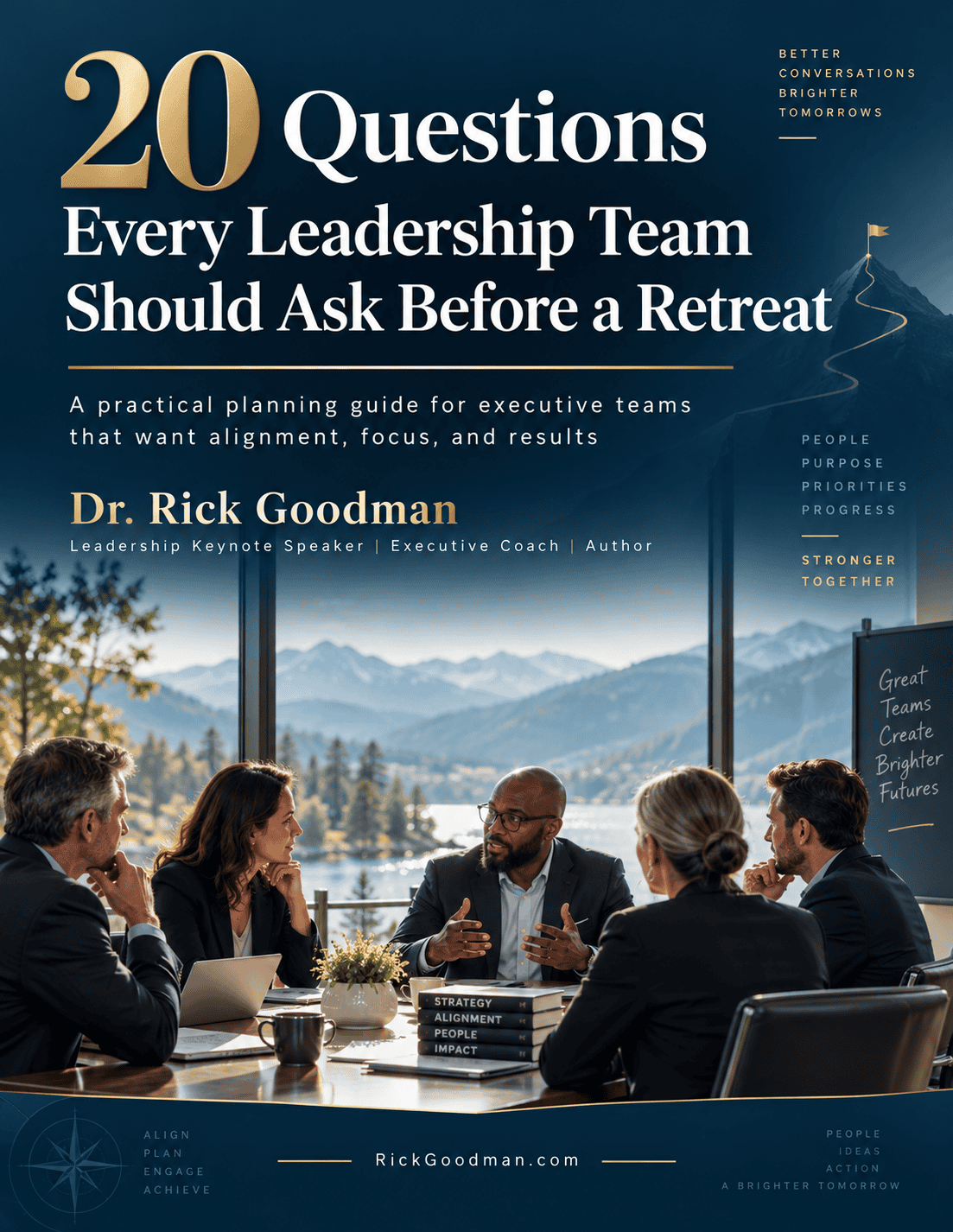
Before you set the agenda, get the free Leadership Retreat Planning Guide. Its 20 planning questions help your team identify the decisions, conversations, and outcomes that belong in the room.
Why Leadership Retreats Matter More Than Ever
Meanwhile, the pace of change has not slowed. Hybrid workforces, AI disruption, economic volatility, and talent retention pressure have all compounded simultaneously. Leadership teams now make more high stakes decisions with less recovery time than at any point in modern business history.
Gallup research consistently shows that only a small fraction of employees feel strongly engaged at work. Disengagement almost always traces back to leadership misalignment at the top. When the leadership team drifts, nothing downstream of them performs at full capacity.
As a result, a properly planned leadership retreat addresses this problem directly. It creates structured, uninterrupted time for the people who set the vision to actually focus on the vision. Not the inbox. Not the dashboard. The direction of the organization.
Real Results From Leadership Retreats That Moved the Needle
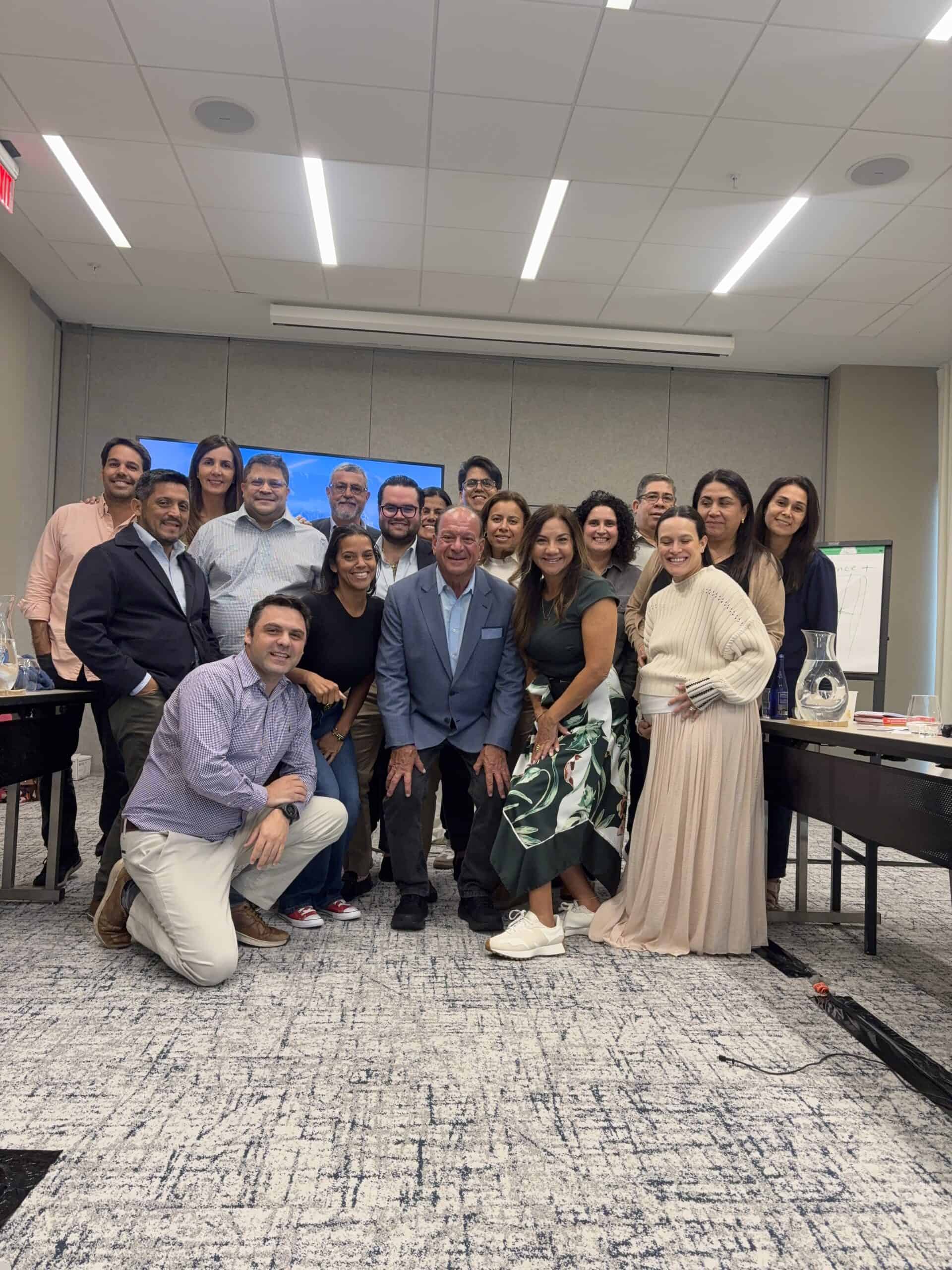
For example, I have personally facilitated leadership retreats for organizations across industries and the pattern stays consistent. Teams walk in fragmented and walk out aligned.
Recent retreats include the Cox Science Center and Aquarium in West Palm Beach, UNC Medical Center in Goldsboro North Carolina, and Hendricks Health System in Texas. In every case, attendees reported measurable increases in cross departmental communication, executive engagement, and strategic clarity.
Consequently, these outcomes were more than encouraging feedback. They translated directly into better decisions, faster execution, and stronger team cohesion back at the office. The common thread across all three was identical: leadership teams that had not been in a room together without a crisis agenda in months, sometimes years. Once that uninterrupted strategic space existed, the breakthroughs came fast.
Recharge and Renew Through Leadership Retreats
Of course, leaders are human. The daily grind takes a real toll and burnout compounds silently until it cannot. Leadership retreats provide a genuine break from the operational grind. Executives return with renewed focus and energy that no internal memo or pep talk can manufacture.
In other words, think of it as preventative maintenance for your most valuable asset. The cost of skipping it is burnout, turnover at the top, and the compounding damage of fatigued leaders making fatigued decisions. You cannot out hustle burnout. You can only out recover it.
Spark Innovation and Break Through Silos
Similarly, leadership retreats offer a powerful antidote to stale thinking. Removing executives from the usual office environment creates space for genuine brainstorming, blue sky strategy, and the kind of cross functional innovation that siloed daily operations suppress.
Furthermore, getting out of the office changes the conversation. It is a neurological one. Environment drives cognition and putting your leadership team in a new setting unlocks thinking they literally cannot access inside their regular four walls. New product concepts, overhauled processes, market entry strategies, and reorganization plans surface in this environment. The ideas exist inside your team already. A retreat gives them room to emerge.
According to Thought Leaders Journal, organizations that invest in structured offsite leadership development consistently report stronger strategic alignment and faster decision execution than those relying solely on in office sessions.
How to Plan a Leadership Retreat Around Strategic Goals
Strategic planning often gets relegated to slide decks nobody reads after the meeting ends. Leadership retreats flip that dynamic completely. Whether you reset annual objectives, revisit a stalled initiative, or map the next growth phase, a retreat gives your team the conditions to plan without the distractions that normally fragment strategic thinking.
As a result, the goal is sharper decisions, faster alignment, and a leadership team that walks out knowing exactly where the organization is headed. Every retreat I facilitate builds around a clear strategic outcome, not just a schedule of activities. The Solutions Oriented Leader workshop anchors most of the retreats I run because it gives teams a shared framework to operate from long after the retreat ends.
Strengthen Relationships and Build Trust Through Leadership Retreats
Culture does not build in a conference room. It builds through shared experiences, honest conversations, and moments where people see each other as humans first and titles second. Leadership retreats create those moments on purpose.
For example, when executives bond outside the pressure of daily operations, trust builds faster. That trust becomes the currency every hard conversation, tough decision, and risky pivot runs on. Without it, leadership teams fracture the moment pressure rises. With it, they close ranks and execute. The best retreats blend structured work sessions with intentional relationship building. Not trust falls. Real, adult, professional connection.
Leadership Development Is Built Into Every Retreat
Day to day operations leave almost no time for leaders to actually develop as leaders. They manage, react, and solve. Retreats flip that dynamic entirely.
In addition, a properly designed retreat doubles as a development environment where current and emerging leaders build critical skills in communication, conflict resolution, decision making, and strategic thinking. This ranks among the highest ROI investments an organization can make in its talent pipeline. That is why executive coaching gets built directly into most of the retreats I facilitate.
Identify Hidden Strengths and Untapped Potential
At the same time, leadership retreats can surface talent that the daily office never reveals. Team activities and facilitated sessions allow individuals to demonstrate strengths outside their usual roles. A quiet team member with exceptional strategic instincts. An emerging leader waiting for the right environment to step forward. The retreat environment creates permission for this kind of emergence in ways the standard workday never does.
Reinforce Company Values Through Leadership Retreats
Over time, values drift. Every organization talks a good game about its values on the careers page and the daily reality usually tells a different story. Leadership retreats close that gap through facilitated discussions, case work, and values alignment exercises that reconnect your leadership team to the why behind the work.
This is not a poster on the wall conversation. It is a practical reset that determines how your executives show up, make calls, and lead their teams for the next twelve months. When values reinforce at the top, they cascade. When they do not, no internal communications campaign saves them.
How to Plan a Leadership Retreat That Delivers Results
Use the Leadership Retreat Planning Guide to gather input from each leader before you finalize the program.
First, craft a clear purpose. Do not hold a retreat for the sake of holding one. Set a specific agenda and define desired outcomes before booking a venue. Whether the goal is boosting innovation, refining a strategic plan, or aligning on a major pivot, your why guides every aspect of the experience.
Next, tailor the experience to your team. Cookie cutter retreats do not work. A high energy team that thrives on activity needs a different design than an introspective team that needs quiet reflection. Understanding your team dynamic produces genuine engagement rather than passive attendance.
Then, step outside the boardroom. Literally. Ditch the conference room and embrace a change of scenery. A new environment sparks new thinking and encourages the open communication that familiar settings suppress.
Also, disconnect to reconnect. Collaboration tools have their place. Resist letting executives check email throughout the day. The retreat exists to disconnect from the operational grind and reconnect to the team and the mission.
Finally, follow up relentlessly. Do not let the momentum die after the retreat ends. Debrief. Build an action plan. Hold the team accountable for the initiatives and goals the retreat produced. The retreat creates the alignment. The follow up converts it into results.
How to Know If Your Team Needs a Leadership Retreat
However, some signals are obvious. Others are not. Here are the clearest indicators that a retreat is overdue:
- Your leadership team disagrees privately but nods in meetings
- Strategic decisions keep getting revisited instead of executed
- New initiatives stall within thirty days of launch
- High performers are quietly disengaging
- Communication across departments has gotten worse, not better
- You cannot remember the last time the leadership team was in the same room with no agenda except the future of the business
If more than two of those ring true, you do not need another quarterly meeting. You need a retreat.
Leadership Retreat Planning FAQs
How far in advance should we plan a leadership retreat?
Start with your desired outcomes and key participants, then allow enough time to gather input, select a venue, and design the sessions. For a larger executive team, begin several months ahead so the agenda reflects real priorities.
Who should attend a leadership retreat?
Invite the people responsible for the decisions and follow through the retreat must produce. Include emerging leaders when their perspective or ownership is essential to the outcome.
What should a leadership retreat agenda include?
Build the agenda around a small number of decisions, facilitated discussion, time for honest reflection, and an action plan with named owners and deadlines. Leave room for relationships and breaks.
How do we measure whether the retreat worked?
Before the retreat, define the decisions and changes you expect. Record commitments at the close, then review progress at 30, 60, and 90 days.
Where can I get a leadership retreat planning guide?
Download Dr. Rick Goodman’s free Leadership Retreat Planning Guide. It includes 20 questions to help your team prepare the agenda and plan follow through.
Final Thoughts on How to Plan a Leadership Retreat
Ultimately, leadership retreats are a strategic investment. They are a strategic intervention. Done right, they reset, realign, and reinvigorate the people who determine everything else about your organization.
Organizations that invest in leadership retreats consistently outperform those that do not. Alignment at the top is the single highest leverage point in any business. Every other investment compounds on top of it. If your leadership team has not had a real retreat in the last twelve months, the cost of doing nothing is higher than you think.
Start With the Right Questions
Get 20 practical questions to help your team set priorities, surface tough conversations, and turn retreat decisions into a 90 day action plan.
Get the Free GuideEnter your name and email on the guide page to receive your copy.
Need a facilitator? Explore leadership retreats or schedule a strategy call.