
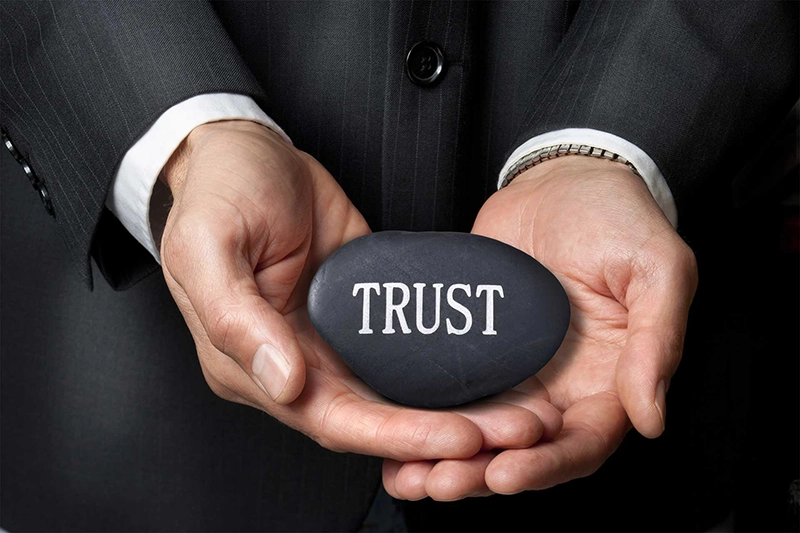
How leaders build trust is not a question of personality. It is a question of behavior. Trust is not something you earn once through a good first impression or a well-delivered speech. It is built through a pattern of consistent actions over time — and it can be destroyed far faster than it is built.
For new leaders especially, the window to establish trust with a team is shorter than most people realize. The behaviors you demonstrate in the first 90 days set the expectations your team will hold you to for the duration of your leadership. Get this right and you create the foundation for everything else: performance, accountability, honest communication, and a team that follows you because they choose to, not because they have to.
Why Trust Is the Foundation of Leadership Performance
Teams that trust their leader operate differently at a fundamental level. They share information earlier, escalate problems faster, take more initiative, and absorb uncertainty more effectively because they believe the person at the front of the room has their interests at heart and will make sound decisions under pressure.
Teams without trust default to self-protection. People withhold information that might reflect poorly on them. They wait to be told what to do rather than acting. They disengage from the mission because they are spending their energy navigating the politics rather than doing the work. The performance gap between high-trust and low-trust teams is not marginal. It is decisive.
How Leaders Build Trust: The Core Behaviors
1. Do What You Say You Will Do
Reliability is the most basic trust-building behavior and the most commonly underestimated. Every commitment you make — large or small — is a test. When you follow through consistently, your team learns that your word means something. When you do not, they adjust their expectations accordingly and stop treating your commitments as real.
This applies to small things as much as large ones. If you said you would send the agenda before the meeting, send it. If you committed to getting someone feedback by Friday, get it to them by Friday. The cumulative weight of small kept commitments builds the credibility that makes your team believe you when the stakes are high.
2. Tell the Truth, Especially When It Is Inconvenient
How leaders build trust with experienced teams comes down significantly to honesty. People who have worked in organizations for any length of time have been managed through enough spin and optimism to recognize it immediately. When a leader gives them straight information — including bad news, uncertainty, and honest assessments of where things stand — it stands out because it is rarer than it should be.
You do not need to share everything. Confidentiality is real and appropriate. But within those boundaries, defaulting to transparency rather than managing perception is one of the most powerful trust signals a leader can send.
3. Why Building Trust As A Leader Protect Your Team
One of the clearest ways leaders build trust is by demonstrating that they will stand behind their team when it costs them something to do so. This means giving credit upward and absorbing criticism downward. It means advocating for your people’s resources, recognition, and development even when organizational politics push in the other direction.
Teams that feel protected by their leader take more initiative, communicate more openly, and weather difficulty more effectively. Teams that feel exposed — where credit flows up but blame flows down — become risk-averse and guarded in exactly the ways that limit performance.
4. Be Consistent Under Pressure
Anyone can lead with integrity when things are going well. The trust-defining moments happen under pressure: when a deadline slips, when a client is unhappy, when the organization is going through change, or when a team member makes a significant mistake. How you show up in those moments tells your team far more about who you are than any leadership statement you have ever made.
Consistency under pressure does not mean being unaffected by difficulty. It means your team can predict how you will respond. When people know that a hard situation will not cause you to become punitive, erratic, or dishonest, they trust you with information about hard situations early enough to do something about them. That early information is one of the most valuable assets a leader can have.
5. Show Genuine Interest in Your People
Trust is personal before it is professional. Leaders who invest time in understanding what matters to their team members — their goals, their challenges, their development aspirations — build a different quality of relationship than leaders who interact with people only in the context of work deliverables.
This does not require elaborate effort. It requires attention. Remembering what someone mentioned last week about a challenge they were working through and following up on it. Asking how someone is doing and actually listening to the answer. Treating the people on your team as full human beings rather than resources assigned to tasks creates the kind of loyalty that performs well beyond what any compensation structure can buy.
6. Give Feedback That Is Honest and Timely
Leaders who avoid difficult feedback in the name of kindness are not building trust. They are building a team that cannot improve and does not know where they actually stand. People deserve to know when their work is not meeting the standard, what specifically needs to change, and what support is available to help them get there.
Honest, well-delivered feedback — given privately, specifically, and with genuine investment in the person’s growth — is one of the clearest signals a leader can send that they take their team members seriously. This is a central focus in executive coaching for leaders at every level because the ability to give honest feedback without damaging the relationship is a skill that requires deliberate development.
7. Admit When You Are Wrong
Nothing accelerates trust with a team faster than a leader who can say clearly and without deflection: I got that wrong, here is what I should have done differently, and here is how I am going to handle it going forward. This is rare enough in organizational life that when people see it, it registers as a signal of extraordinary leadership character.
The fear that admitting mistakes undermines authority is almost universally backwards. Leaders who cannot admit mistakes signal to their teams that accuracy is less important than self-protection. Leaders who acknowledge mistakes with accountability and a clear path forward signal that getting to the right answer matters more than being seen as infallible. That is the leader people want to follow.
New Manager Trust Building Takes Time and Breaks Fast
How leaders build trust is ultimately about the accumulation of small, consistent behaviors over time. There is no single moment that creates it and no shortcut that replaces the sustained pattern of integrity, transparency, and genuine investment in people that trust requires.
What there is: a clear set of behaviors you can start practicing today that will shift the dynamic of your team in ways that compound over time. The leaders who prioritize this work build organizations that perform at a level that leaders chasing short-term metrics rarely reach.
If you are a new manager working to establish your leadership foundation, or a senior leader rebuilding trust after a difficult period, the Solutions-Oriented Leader workshop gives you the practical framework to accelerate that process.
Looking to bring this conversation to your organization? Book Dr. Rick Goodman for your next leadership event, retreat, or training program.
For more on trust-based leadership and high-performance team culture, visit Thought Leaders Journal.